Many travelers who begin planning a Tanzania safari often ask the same question: Is it better to visit Serengeti or Ngorongoro Crater?
The short answer is simple: if you are planning a safari in Tanzania, it is not worth visiting only one of them. These two destinations are completely different, and together they create the perfect African safari experience.
Here is why.
The Ngorongoro Crater, often called the “Garden of Eden of Africa” and declared a UNESCO World Heritage Site, is one of the most extraordinary places on the African continent. It is a massive volcanic caldera covering approximately 264 km², home to more than 25,000 animals living within the crater.
What makes the Ngorongoro Crater safari so special is that a huge variety of wildlife lives together in this natural enclosure. Antelopes, elephants, buffaloes, wildebeest, monkeys, lions, hyenas, and many other species coexist in one of the richest ecosystems in Africa.
Ngorongoro is also one of the few places in Tanzania where visitors still have a chance to see the black rhinoceros, one of the rarest animals to spot during a safari and one of the famous Big Five animals.
The landscape inside the crater is equally remarkable. Within these 264 km², you can find several ecosystems: forested crater walls, a soda lake where flamingos often gather, freshwater lakes, rivers, and natural springs that become especially active during the rainy season.
All of this makes Ngorongoro Crater a unique destination where wildlife is concentrated in a relatively small area, giving visitors the opportunity to see an incredible number of animals during a single day safari.
Endless. The name itself reflects the essence of this extraordinary place.
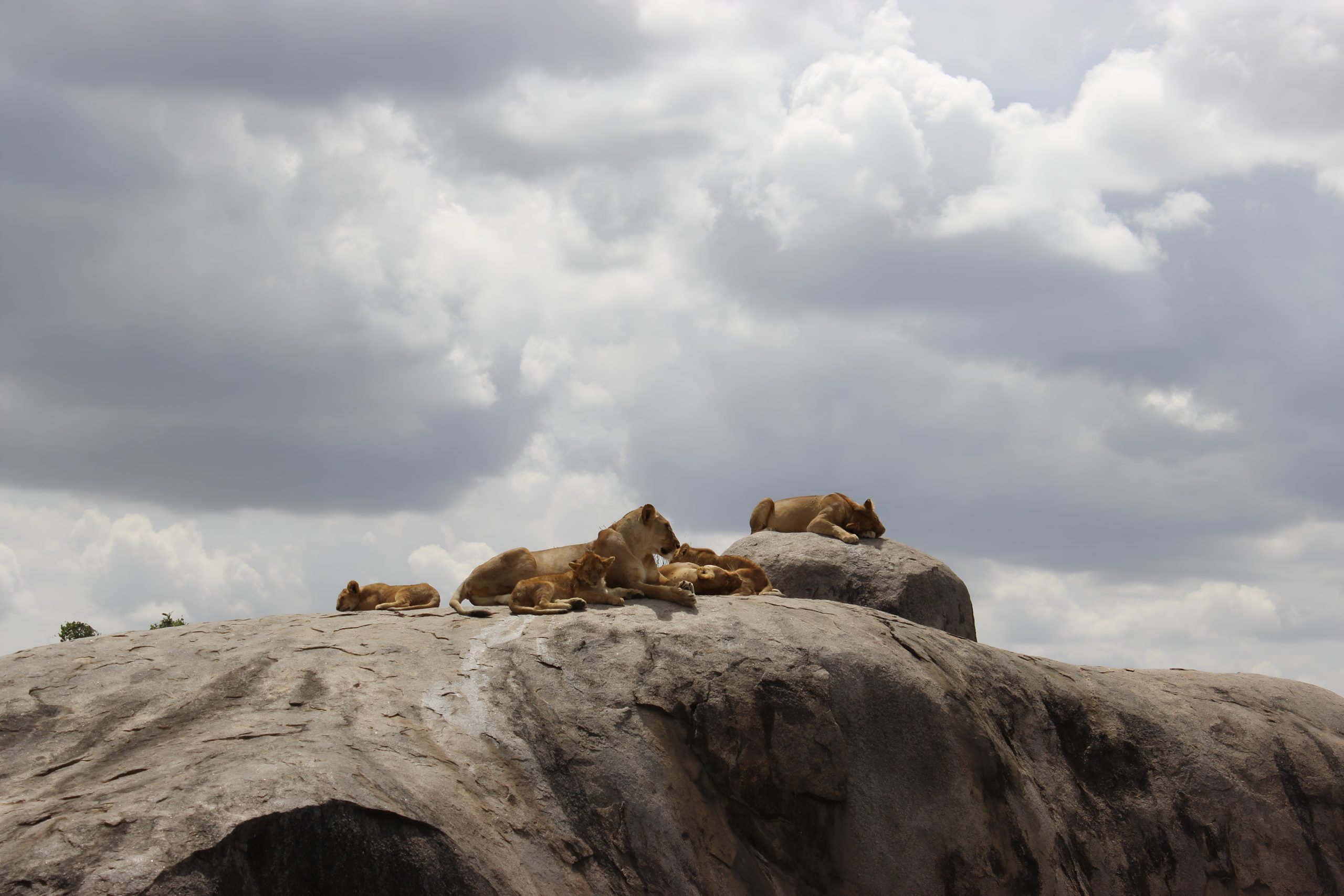
The Serengeti National Park is famous for its vast plains of savannah that seem to stretch forever. Scattered across these plains are solitary acacia trees and rocky formations known as kopjes, which provide shelter for wildlife and strategic viewpoints for predators.
This creates one of the most iconic landscapes in Africa.
Covering approximately 14,763 km², Serengeti National Park is considered one of the best national parks not only in Africa but in the world. For many travelers, a Serengeti safari represents the ultimate African wildlife experience.
If you have ever watched wildlife documentaries, there is a good chance that many of those scenes were filmed here. The Serengeti has been featured in some of the most famous wildlife documentaries ever produced.
Visitors on a Serengeti safari in Tanzania can see the legendary Big Five: lion, elephant, buffalo, leopard, and rhinoceros.
But the Serengeti is best known for hosting the Great Migration, one of the most spectacular natural events on Earth. Every year, more than two million wildebeest, along with nearly one million zebras and other herbivores, move across the Serengeti ecosystem in search of fresh grass and water.
During this incredible journey, the herds must cross dangerous rivers such as the Grumeti River and the Mara River, where crocodiles wait beneath the surface.
These dramatic crossings create some of the most intense moments in the natural world — a powerful reminder of the balance of life within the African ecosystem.
The truth is that you should not choose between them. Both destinations offer completely different but complementary safari experiences.
Ngorongoro Crater stands out for its extraordinary concentration of animals in a relatively small area, allowing travelers to see an incredible amount of wildlife in a short time.
The Serengeti, on the other hand, offers the most classic African safari experience, with endless landscapes, dramatic wildlife encounters, and the world-famous Great Migration.
For this reason, at Sensation of Africa, we always recommend combining both destinations in the same itinerary.
A classic Northern Tanzania safari usually includes:
Each park has its own personality, landscapes, and wildlife, making a Tanzania safari tour one of the most diverse and unforgettable travel experiences in Africa.



© 2026 Sensation of Africa | Terms and Conditions| Privacy Policy